
Delving into the realm of roof replacement financing options, this guide aims to provide a thorough understanding of the various avenues available to homeowners. From traditional methods to specialized programs, this discussion will equip you with the knowledge needed to make informed decisions regarding your roof replacement project.
Overview of Roof Replacement Financing Options
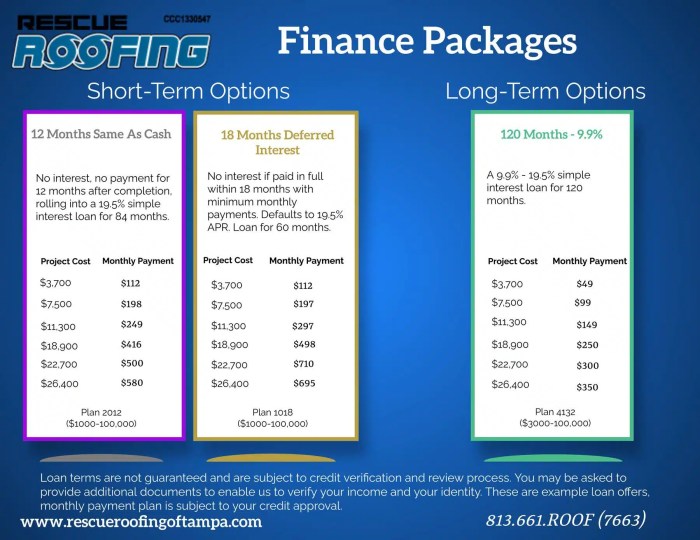
When it comes to replacing your roof, exploring different financing options is crucial to ensure a smooth and successful project. By choosing the right financing option, you can alleviate the financial burden and make the process more manageable.
Common Types of Roof Replacement Financing
- Personal Loans: These are unsecured loans that can be used for various purposes, including roof replacement. They offer flexibility in terms of repayment options and interest rates.
- Home Equity Loans: These loans use your home as collateral and typically have lower interest rates than personal loans. They can be a good option for larger roof replacement projects.
- Roofing Financing Programs: Some roofing companies offer in-house financing or work with third-party lenders to provide financing options specifically for roof replacement projects.
Benefits of Choosing the Right Financing Option
- Manageable Payments: The right financing option can help you spread out the cost of roof replacement over time, making it more affordable.
- Flexible Terms: Different financing options come with varying terms and conditions, allowing you to choose one that best fits your financial situation.
- Preserve Savings: Financing your roof replacement project can help you preserve your savings for emergencies or other investments.
Traditional Financing Methods

When it comes to financing a roof replacement, there are several traditional methods that homeowners can consider. These include personal savings, credit cards, and bank loans. Each option has its own set of pros and cons, so it's important to weigh them carefully before making a decision.
Personal Savings
Using personal savings to finance a roof replacement is a common approach for homeowners who have been diligently saving for such unexpected expenses. The main advantage of this method is that you won't have to worry about paying back any loans or accruing interest.
However, using your savings for a roof replacement may deplete your emergency fund, leaving you vulnerable to other unforeseen costs.
Credit Cards
Credit cards can be a convenient way to finance a roof replacement, especially if you need to cover the cost quickly. The flexibility and rewards offered by credit cards can be appealing, but high interest rates can quickly accumulate if you're unable to pay off the balance in full.
It's important to consider the long-term financial implications before using credit cards for such a significant expense.
Bank Loans
Bank loans, such as personal loans or home equity loans, are another option for financing a roof replacement. These loans typically offer lower interest rates compared to credit cards, making them a more cost-effective choice. However, the application process can be more stringent, and you'll need to have a good credit score to qualify for favorable terms.
It's essential to compare different loan options and choose the one that best fits your financial situation.
Specialized Roofing Financing Programs
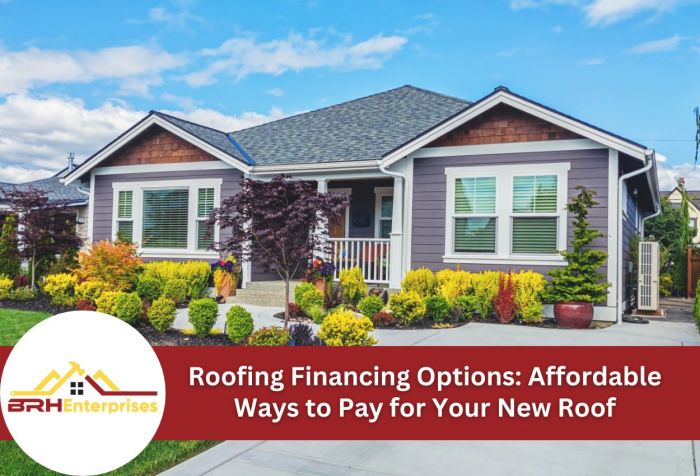
Specialized roofing financing programs are tailored financial options offered by roofing companies or financial institutions to help homeowners cover the costs of roof replacement. These programs often come with specific benefits and eligibility criteria.
Roofing Company Financing
Some roofing companies offer in-house financing options to make roof replacement more accessible to customers. These programs may have lower interest rates or flexible payment plans compared to traditional loans. To qualify for roofing company financing, homeowners typically need to provide proof of income and pass a credit check.
The application process is usually straightforward, and approval decisions are made quickly.
Manufacturer-sponsored Financing
Manufacturers of roofing materials sometimes partner with financial institutions to offer specialized financing programs. These programs may provide competitive rates and extended repayment terms, making it easier for homeowners to afford high-quality roofing materials. Eligibility requirements vary but may include factors such as credit score and income level.
Applying for manufacturer-sponsored financing usually involves submitting an online application and awaiting approval.
Energy-Efficiency Financing
Some financial institutions offer specialized financing for energy-efficient roofing projects. Homeowners looking to upgrade to energy-efficient roofing materials may qualify for loans with favorable terms and incentives. These programs aim to promote sustainability and help homeowners reduce their energy costs over time.
Eligibility for energy-efficiency financing often depends on the projected energy savings of the roofing project and the homeowner's credit history.
Advantages of Specialized Roofing Financing Programs
- Lower interest rates compared to traditional loans.
- Flexible payment plans tailored to the homeowner's budget.
- Quick approval process for faster access to funds.
- Opportunity to finance high-quality roofing materials without a large upfront payment.
- Promotion of energy-efficient upgrades through specialized financing options.
Government Assistance Programs
Government assistance programs can provide valuable financial aid for homeowners in need of roof replacement. These programs are designed to help those who may not have the means to cover the full cost of a new roof on their own.
Overview of Government Assistance Programs
- Government assistance programs vary by location, so it's important to research what options are available in your area.
- These programs may be offered at the federal, state, or local level, and each may have its own set of requirements and eligibility criteria.
- Financial aid provided through government assistance programs can come in the form of grants, low-interest loans, or tax credits.
Qualifications for Government Assistance Programs
- To qualify for government assistance programs related to roof replacement, homeowners typically need to meet certain income requirements based on the size of their household.
- Some programs may also take into account the age and condition of the roof, as well as any safety hazards it may pose.
- Documentation such as proof of income, property ownership, and estimates for roof replacement costs may be required during the application process.
Application Process and Timeline
- The application process for government assistance programs for roof replacement can vary in length and complexity, depending on the specific program.
- Homeowners may need to submit an application form, provide supporting documents, and potentially undergo an inspection of the roof to assess its condition.
- Once an application is submitted, the timeline for approval and disbursement of funds can also vary, so it's important to stay informed and follow up as needed.
Home Equity Options

When it comes to financing a roof replacement project, homeowners have the option of tapping into their home equity through loans or lines of credit. This can be a viable solution for those looking to fund a large project like roof replacement.
Benefits and Risks of Using Home Equity Options
- One of the main benefits of using home equity options is that they typically offer lower interest rates compared to other forms of financing, such as personal loans or credit cards.
- Home equity loans or lines of credit also allow homeowners to borrow larger amounts of money, making it easier to cover the costs of a roof replacement.
- However, using home equity options means putting your home at risk. If you fail to make payments, you could potentially lose your home through foreclosure.
- It's important to carefully consider your financial situation and ability to repay the loan before using home equity options for roof replacement financing.
Tips for Maximizing Home Equity Options
- Shop around for the best rates and terms on home equity loans or lines of credit. Compare offers from different lenders to ensure you're getting the most favorable deal.
- Consider using a home equity line of credit (HELOC) instead of a lump-sum loan, as it allows you to borrow only what you need when you need it, potentially saving on interest costs.
- Make sure to budget for the monthly payments on your home equity loan or line of credit, as failure to make payments could put your home at risk.
- If you're unsure about using home equity options, consult with a financial advisor to discuss the best financing options for your roof replacement project.
Closing Summary
In conclusion, navigating the world of roof replacement financing options can be daunting, but armed with the right information, you can confidently choose the best path forward. Whether you opt for traditional financing methods or explore specialized programs, remember that securing the right financial assistance is crucial for a successful roof replacement endeavor.
FAQ Overview
Can I use a personal loan for roof replacement financing?
Yes, personal loans are a common traditional financing method used for roof replacement. They typically have fixed interest rates and repayment terms.
What are the benefits of specialized roofing financing programs?
Specialized financing programs often offer competitive interest rates and tailored solutions for roof replacement projects, making them a popular choice for many homeowners.
How do home equity options differ from traditional financing methods?
Home equity options, such as loans or lines of credit, leverage the equity in your home to fund roof replacement. They can offer lower interest rates but come with the risk of using your home as collateral.